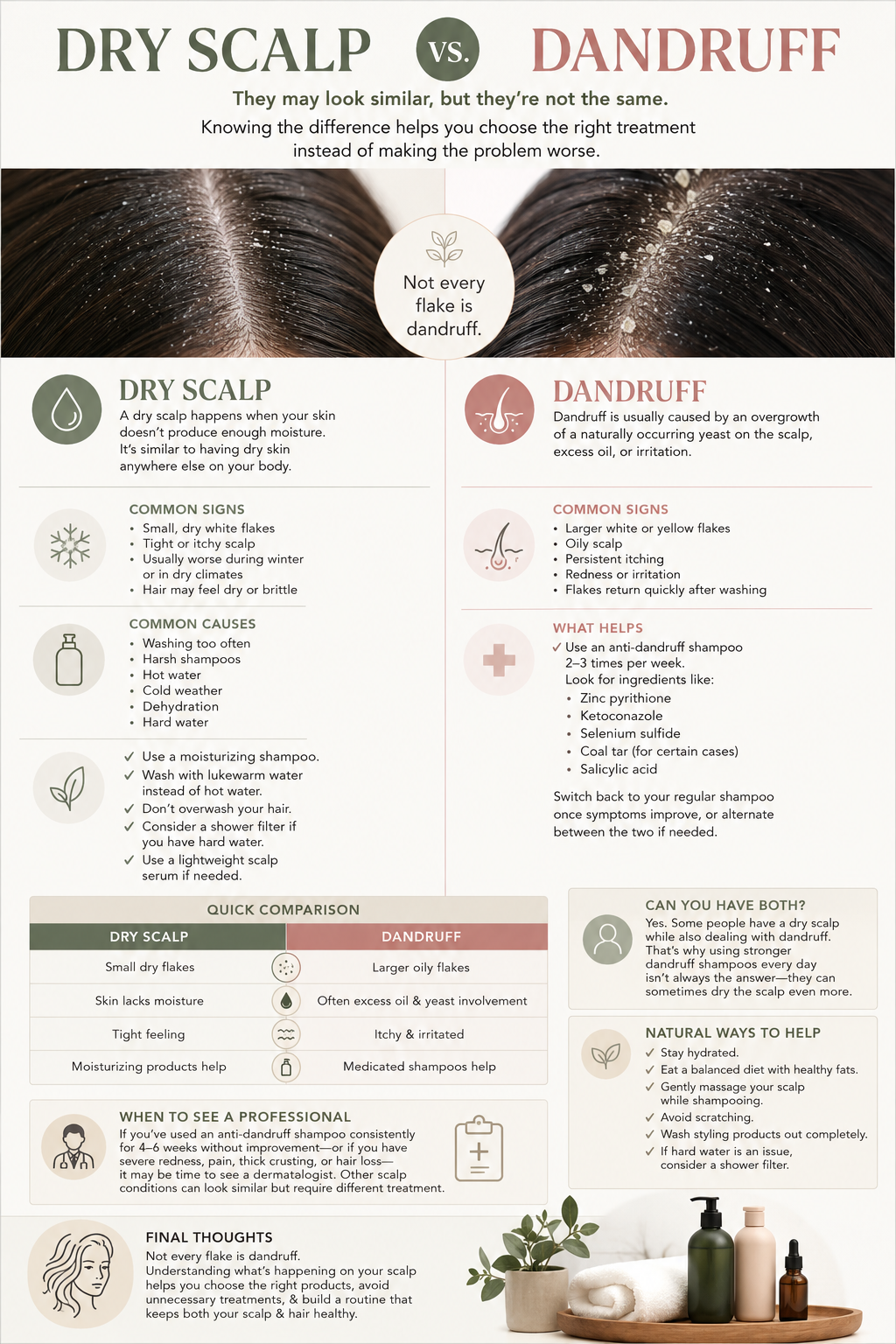
Dry Scalp vs. Dandruff
They may look similar, but they’re not the same thing.
One of the biggest misconceptions in hair care is assuming every flake is dandruff.
Knowing the difference helps you choose the right treatment instead of making the problem worse.
Read time: 4–5 minutes
Dry Scalp
A dry scalp happens when your skin doesn’t produce enough moisture.
It’s similar to having dry skin anywhere else on your body.
Common signs
• Small, dry white flakes
• Tight or itchy scalp
• Usually worse during winter or in dry climates
• Hair may feel dry or brittle
Common causes
Washing too often
Harsh shampoos
Hot water
Cold weather
Dehydration
Hard water
What helps
✓ Use a moisturizing shampoo.
✓ Wash with lukewarm water instead of hot water.
✓ Don’t overwash your hair.
✓ Consider a shower filter if you have hard water.
✓ Use a lightweight scalp serum if needed.
Dandruff
Dandruff is different.
It’s usually caused by an overgrowth of a naturally occurring yeast on the scalp, excess oil, or irritation. The condition is often associated with Seborrheic dermatitis.
Common signs
• Larger white or yellow flakes
• Oily scalp
• Persistent itching
• Redness or irritation
• Flakes return quickly after washing
What helps
✓ Use an anti-dandruff shampoo 2–3 times per week.
Look for ingredients like:
Zinc pyrithione
Ketoconazole
Selenium sulfide
Coal tar (for certain cases)
Salicylic acid
Switch back to your regular shampoo once symptoms improve, or alternate between the two if needed.
Can You Have Both?
Yes.
Some people have a dry scalp while also dealing with dandruff.
That’s why using stronger dandruff shampoos every day isn’t always the answer—they can sometimes dry the scalp even more.
Natural Ways to Help
These won’t cure dandruff, but they may help support a healthy scalp.
Stay hydrated.
Eat a balanced diet with healthy fats.
Gently massage your scalp while shampooing.
Avoid scratching.
Wash styling products out completely.
If hard water is an issue, consider a shower filter.
When to See a Professional
If you’ve used an anti-dandruff shampoo consistently for 4–6 weeks without improvement—or if you have severe redness, pain, thick crusting, or hair loss—it may be time to see a dermatologist. Other scalp conditions can look similar but require different treatment.
Final Thoughts
Not every flake is dandruff.
Understanding what’s happening on your scalp helps you choose the right products, avoid unnecessary treatments, & build a routine that keeps both your scalp & hair healthy.